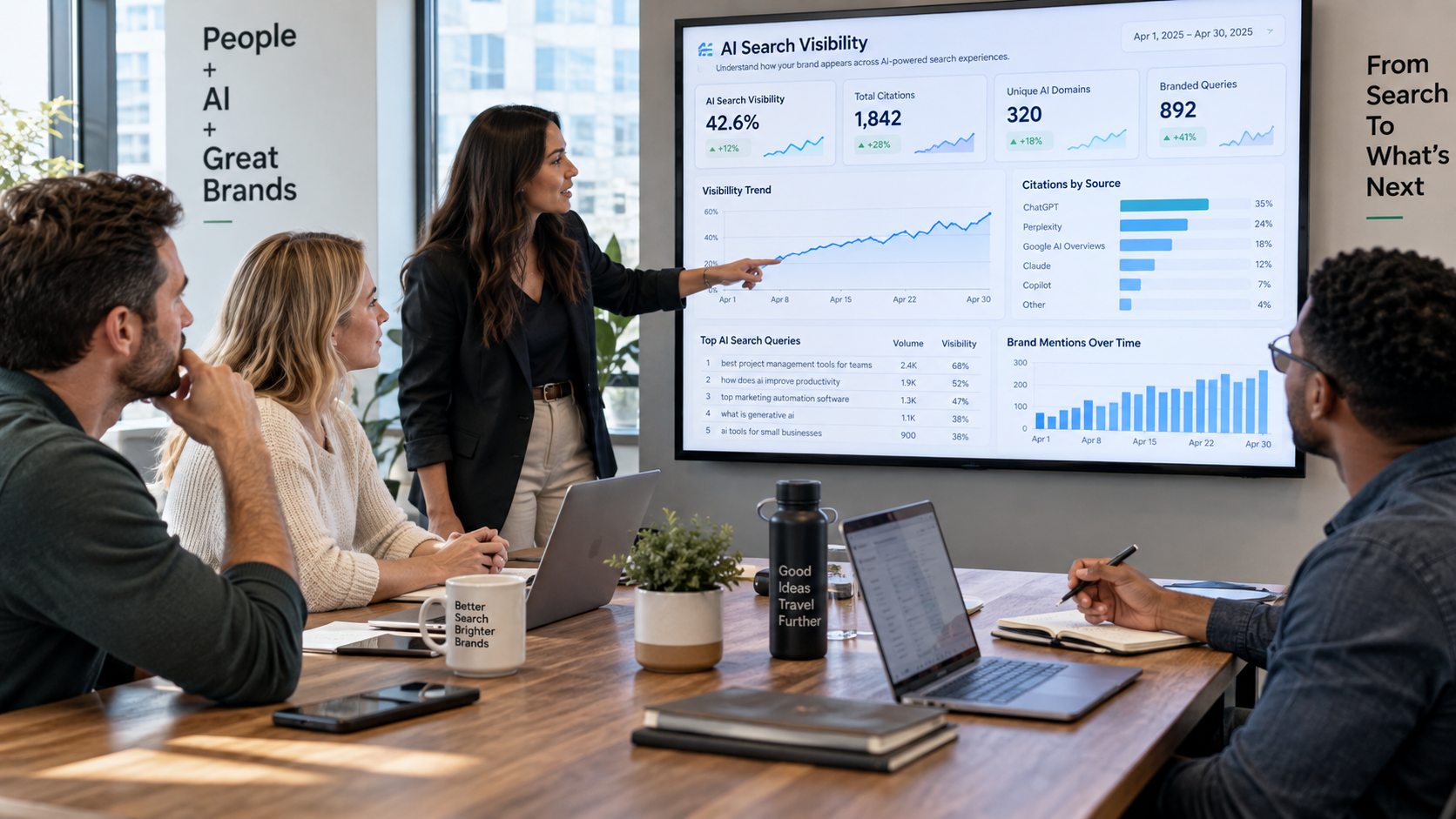
Search is changing. People are increasingly asking AI-powered platforms for recommendations, explanations, comparisons, businesses, products, and services instead of relying exclusively on traditional search results. Google AI Overviews and AI Mode, Microsoft Copilot, and ChatGPT search are creating new ways for websites to be discovered.
For businesses, this means website optimization is no longer only about ranking for a list of keywords. Your website also needs to be easy for search engines and AI systems to understand, evaluate, reference, and connect with user questions.
This emerging approach is often discussed using terms such as AI search optimization, Generative Engine Optimization (GEO), and Answer Engine Optimization (AEO). However, businesses do not need to abandon traditional SEO. Google specifically states that established SEO fundamentals remain important for its AI search experiences. Google’s guide to optimizing for generative AI features emphasizes valuable content, technical accessibility, and established SEO practices.
What Is AI Search Optimization?
AI search optimization is the process of making website content easier for AI-powered search systems to discover, understand, evaluate, and potentially reference when generating answers.
Traditional SEO often focuses on helping a webpage rank for specific search queries. AI search introduces another layer. Instead of simply displaying a list of pages, an AI system may synthesize information from multiple sources and provide a conversational response.
This makes clarity, relevance, credibility, and useful information increasingly important.
A well-optimized website should clearly communicate:
- What the business does
- Who the business serves
- What products or services it provides
- Where the business operates
- Why the business is qualified to provide those services
- What questions its content answers
- Which sources support important claims
AI search optimization is therefore not about inserting the phrase “AI search” throughout a page. It is about creating a website that both people and modern search systems can understand.

Why AI Search Visibility Matters in 2026
The search experience is becoming more conversational. Users can ask longer, more specific questions and receive synthesized answers rather than manually opening multiple pages.
Google says its AI search features continue to rely on its core Search systems and that normal SEO best practices remain foundational. Google also recommends ensuring that important content is available in text, that pages can be crawled, that internal links help users discover content, and that structured data matches visible page content.
Meanwhile, Bing Webmaster Tools now provides an AI Performance report showing how websites are cited across Microsoft Copilot, AI-generated Bing summaries, and selected partner experiences.
For businesses, this creates a new visibility opportunity. Instead of asking only, “Where does my website rank?” marketers can increasingly ask, “Is my business being discovered and referenced when customers ask AI for recommendations?”
Create Content That Directly Answers Questions
One of the most practical ways to prepare for AI search is to create content that clearly answers the questions your customers actually ask.
Think beyond individual keywords. Consider the complete questions, problems, comparisons, and decisions associated with your products or services.
For example, a web design company could create content answering questions such as:
- How much does professional website design cost?
- What makes a business website effective?
- How can a website generate more leads?
- What should a small business include on its website?
- How can businesses improve website conversion rates?
- What is the difference between web design and SEO?
Answering these questions thoroughly gives your website more opportunities to become a useful source for people researching your industry.
This approach also complements your existing user-centered design strategy. Content should be created around the needs of real users rather than simply around search-engine terminology.
Build Strong Topic Authority
AI search optimization should not be treated as a single-page project. A website becomes stronger when multiple pages demonstrate expertise around related subjects.
For example, a digital design company might create connected content covering website design, branding, SEO, social media, video, user experience, and digital marketing.
Internal linking helps connect these topics. Your existing article about AI-enhanced branding and web design can support a broader content cluster around artificial intelligence and digital experiences.
Likewise, your article on AI-powered branding strategies provides another relevant connection between branding, AI, and business growth.
Make Your Website Easy to Understand
AI systems need to interpret your website’s content. Clear website architecture can make that task easier.
Important information should not be hidden behind complicated interfaces or presented only as images. Use descriptive headings, readable paragraphs, lists, tables where appropriate, and straightforward navigation.
Your service pages should clearly explain what you offer. Your About page should establish who you are. Your contact information should be easy to find. Your blog should provide useful information rather than simply producing pages for search traffic.
Google’s official documentation on AI features specifically recommends making important content available in textual form and using internal links to make content discoverable.
Use Internal Links Strategically
Internal links are valuable for both users and search systems. They create relationships between related pages and help visitors move deeper into your website.
Instead of adding random internal links, connect pages where the additional resource genuinely helps the reader.
For example, an article about AI search can naturally link to your content about AI-driven website personalization when discussing personalized digital experiences.
Your article about motion graphics and micro-animations can also be referenced when discussing interactive website experiences and user engagement.
These connections help create a logical content structure while giving readers additional information.
Strengthen Your Business and Brand Signals
AI search systems need to understand entities, businesses, products, and services. A website should therefore provide consistent information about the business across important pages and external platforms.
Make sure your business name, services, location, contact details, descriptions, and other important information are consistent wherever your business is represented online.
Strong branding can also help create a recognizable digital identity. Your website, social profiles, graphics, videos, and other marketing materials should communicate a consistent message.
Your existing graphic design trends content provides another opportunity to connect visual branding with your broader digital strategy.
Create Original and Useful Content
AI can generate large amounts of generic information, which makes original human-created value increasingly important.
Businesses should look for opportunities to publish content that demonstrates experience, practical knowledge, original observations, examples, processes, case studies, or data.
Instead of writing another generic article about “the importance of websites,” consider explaining specific problems your customers encounter and how those problems can be solved.
Originality can make content more useful to readers while giving search systems stronger reasons to surface your pages.
Optimize Images and Multimedia
AI search is not limited to plain text. Search experiences increasingly incorporate images, videos, and other forms of content.
Images should have descriptive filenames and useful alt text. Videos should have meaningful titles and supporting descriptions. Important information should still be available as text so that users and search systems can understand the context.
Businesses can also use visual storytelling to strengthen their brand. Your existing guide on visual content in social media marketing provides a natural extension of this strategy.
Don’t Ignore Technical SEO
AI search does not eliminate technical SEO. A website still needs to be accessible, crawlable, fast, mobile-friendly, and logically structured.
Check that important pages are not accidentally blocked from crawling. Review broken links, redirects, canonical URLs, indexing settings, mobile usability, and page performance regularly.
Structured data can also help search engines understand certain types of content. However, businesses should avoid adding unnecessary or inaccurate markup simply because it is associated with AI search.
Google’s structured data documentation explains which structured data features are supported in Google Search and how they should correspond with the visible content of a page.
Make Content Easy to Cite
AI-generated answers often rely on sources that can be retrieved and understood clearly. This makes well-structured content especially valuable.
Use descriptive headings and concise explanations. Break complicated subjects into logical sections. Support important claims with reliable sources where appropriate.
Lists, definitions, comparisons, examples, and step-by-step explanations can make complex information easier for readers to understand.
However, the objective should not be to manipulate AI systems into citing your content. The better strategy is to create information that genuinely deserves to be referenced.
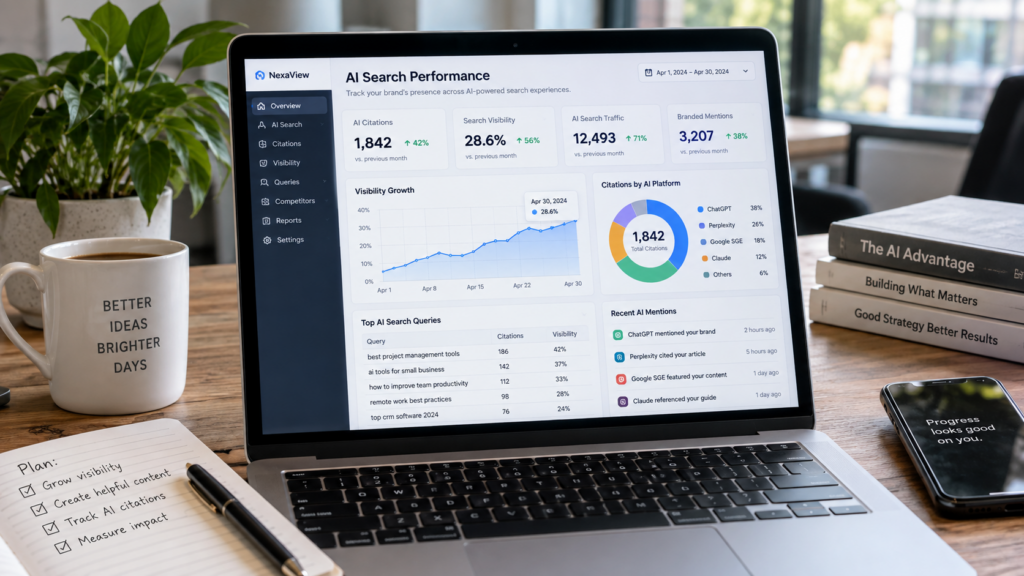
Monitor AI Search Visibility
As AI search becomes a larger part of discovery, businesses should begin paying attention to how their websites appear in these experiences.
Microsoft’s AI Performance reporting can show which pages are cited in supported AI experiences and which queries are associated with those citations. Google has also introduced generative AI performance reporting in Search Console, giving site owners additional visibility into impressions from generative AI features.
Google announced that these generative AI performance insights were rolled out worldwide beginning August 31, 2026, making this an especially timely area for website owners to monitor.
Regular monitoring can help businesses identify which topics are being discovered, which pages need improvement, and where new content opportunities exist.
AI Search Does Not Replace Traditional SEO
One of the biggest misconceptions about AI search is that businesses need to abandon traditional SEO.
Google’s current guidance makes the opposite point: existing SEO fundamentals remain important for AI search features. Crawlability, helpful content, internal linking, technical quality, strong page experiences, and relevant information continue to matter.
Generative Engine Optimization should therefore be viewed as an extension of a broader search and content strategy rather than a replacement for SEO.
How Businesses Can Prepare for AI Search
Businesses can begin preparing for AI search without rebuilding their entire websites.
- Audit your existing content: Identify outdated, thin, repetitive, or unclear pages.
- Answer customer questions: Build useful content around real questions and problems.
- Improve website structure: Use descriptive headings, logical navigation, and meaningful internal links.
- Strengthen business information: Make your services, expertise, location, and contact information clear.
- Publish original insights: Add experience, examples, case studies, and useful observations.
- Improve multimedia: Use high-quality images, descriptive alt text, and relevant video.
- Monitor AI visibility: Review available reports and look for pages that earn citations or impressions.
- Keep content updated: Refresh information when facts, services, trends, or industry practices change.
The Future of AI Search Optimization
AI search is still evolving, but the direction is becoming clearer. Search is becoming more conversational, more contextual, and increasingly capable of synthesizing information from multiple sources.
For businesses, this means the quality of the underlying website matters more than ever. A site that clearly explains what a company does, provides genuinely useful information, demonstrates expertise, and delivers a strong user experience is better positioned for multiple discovery channels.
The future is not about choosing between SEO and AI search optimization. It is about building a digital presence that works for people while remaining understandable to the technologies that help people discover information.
Conclusion
AI search optimization is becoming an important part of digital marketing in 2026. Businesses can prepare by creating useful content, strengthening website structure, improving internal linking, maintaining accurate business information, publishing original insights, and monitoring how their pages appear in emerging AI search experiences.
The most important principle is simple: build a website that is genuinely useful to people first. Strong SEO fundamentals, clear content, trustworthy information, and thoughtful web design provide the foundation for visibility across both traditional and AI-powered search.
For businesses looking to strengthen their online presence, combining professional web design, SEO, branding, social media, and content strategy can create a stronger foundation for the next generation of digital discovery.